Why Involving Kids in Meal Planning Matters for Healthy Habits
When children take part in deciding what the family eats and helping to prepare it, they learn food skills and the importance of healthy eating in a natural, hands-on way. Experts agree that involving kids in meal planning and cooking supports healthier eating habits and makes family meals more enjoyable.
There's an added bonus: when kids are part of the meal decisions, they are often more willing to eat what's served. That can make dinnertime less stressful and reduce food waste.
- Kids gain confidence and practical skills that last a lifetime.
- Meals can become a positive family experience rather than a daily struggle.
- Children are more likely to try new foods they helped choose or prepare.
Sources: Government of Canada, American Heart Association, WashU Medicine Physicians
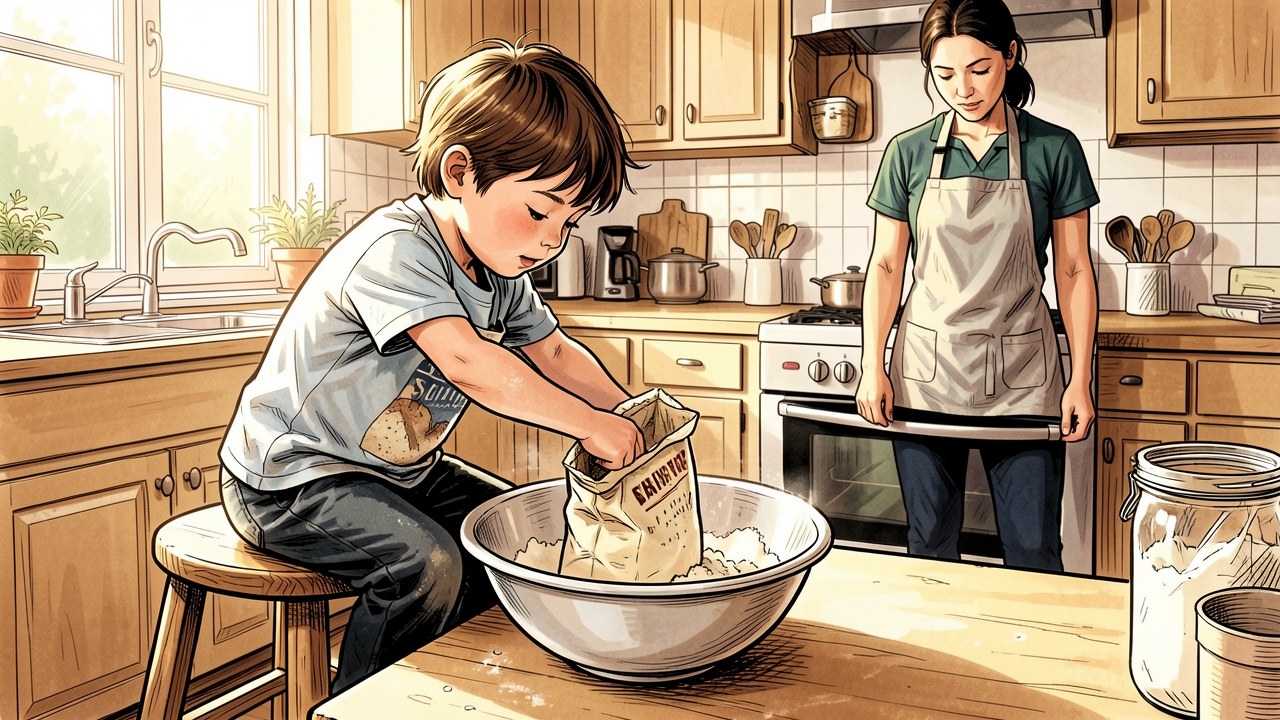
Age-Appropriate Tasks: Matching Your Child's Readiness
Children develop at different rates, so it's important to choose tasks that fit your child's individual skills and attention span. Always supervise children in the kitchen, especially near heat, sharp objects, or electrical appliances.
You know your child best. Start with small, safe tasks and gradually increase complexity as they show interest and ability. The goal is to build confidence and a positive relationship with food, not to rush their independence.
- Preschoolers can help with simple, safe actions like washing produce and tearing lettuce.
- Elementary-age kids can measure ingredients, stir mixtures, and help set the table.
- Teens can take on more complex tasks like chopping vegetables and using the stove, with your guidance and supervision.
How to Run a Family Meal Planning Session Where Everyone Contributes
Set aside a few minutes each week—perhaps on Sunday—to gather the family and sketch out the upcoming meal schedule. Start with a simple structure: aim for plates that are half vegetables and fruits, with the other half split between whole grains and healthy protein. Ask each child to contribute at least one meal idea or side dish.
During planning, think about assignments that save time and build teamwork. An adult can take the entree, an older child might handle a side dish, and a younger child can set the table. When everyone has a role, dinner becomes a shared project.
- Let each child pick a vegetable, a whole grain, or a fruit they want to try.
- Write the menu on a whiteboard or paper where everyone can see it during the week.
- Keep a list of 'go-to' ideas that your family enjoys, and rotate in one new option each week.
- When making the grocery list, ask kids what they want to eat this week.
Sources: Harvard T.H. Chan School of Public Health, WashU Medicine Physicians
Simple Meal Ideas Kids Can Help Prepare Safely
Instead of complex recipes, think of simple meal ideas that offer safe, achievable tasks for young helpers. For example, a build-your-own taco or pizza night lets kids choose healthy toppings and assemble their own plate—this is a great way to involve them without requiring much cooking. Salads, wraps, or grain bowls work well too.
For breakfast or snacks, kids can help make fruit and yogurt parfaits, oatmeal with toppings, or whole-wheat toast with nut butter and banana slices. These provide opportunities for measuring, pouring, and arranging, all while reinforcing healthy food choices.
- Build-your-own taco or pizza night (choose lean protein, veggies, and whole-grain shells).
- Fruit and yogurt parfaits (layer fruit, yogurt, and a sprinkle of whole-grain cereal).
- Veggie and hummus plate (let kids wash and arrange cut veggies).
- Simple sandwiches or wraps with a variety of colorful fillings.
Turn Picky Eating into a Positive Experience Through Involvement
If your child refuses to eat something, don't force it. Research suggests children may need to be exposed to a new food up to a dozen times, in different forms and situations, before they decide whether they like it. Involving kids in the whole process—from choosing the vegetable at the store to washing and preparing it—can increase their willingness to try it at the table.
During family planning, encourage your child to pick one new food to explore each week. When their choice appears on the plate, they feel ownership, which can make them more open to at least a taste. Pair this with a 'no pressure' rule: they don't have to love everything, but they should try a small bite.
- Let your child choose a new vegetable or fruit at the store.
- Involve them in washing, peeling, or chopping (with safe tools).
- Serve the food in a fun shape or as part of a colorful dish.
- Don't give up after one try; keep offering the food in different ways.
- Praise your child for trying, not for cleaning the plate.
Sources: American Heart Association
Common Pitfalls: Time, Mess, and Safety
Between the mess, the extra time, and safety concerns, the thought of having kids in the kitchen can be overwhelming. But a few simple strategies can make it workable.
To manage time, focus on tasks that truly need your help only when it's safe—like handling the oven—and let kids do simple, independent tasks while you prep the main dish. For example, while you sauté the chicken, a child can wash the lettuce or set the table.
- Start with just one or two helpers and one task each to keep things calm.
- Use easy-to-clean surfaces and have a step stool ready for small children.
- Establish clear safety rules: wash hands, no touching the stove or hot pans, and ask permission to use electric appliances.
- Embrace the mess—it's part of learning. Save intensive cooking for weekends when you have more time.
- Keep a damp cloth or sponge nearby for quick cleanups.
Fun Activities to Reinforce Learning About Healthy Foods
Beyond cooking, play can reinforce the healthy eating plate concept. Use visual plates or posters showing the recommended portions: half vegetables and fruits, a quarter whole grains, and a quarter healthy protein. Turn snack time into a sorting game: 'Can you name a food with lots of fiber?' or 'What color vegetable is this?'
Involve kids in the garden if you have space, or even grow a small pot of herbs on the windowsill. Watching a plant grow from seed to table is a powerful lesson about where food comes from and can pique curiosity about trying what they've grown.
- Create a 'rainbow challenge' to eat fruits and vegetables of different colors each day.
- Let kids be 'menu planners' for one meal a week, choosing items from each food group.
- Read picture books about food and cooking together.
- At the grocery store, ask kids to find a new vegetable or check the label for whole grains.
- Make a placemat that shows the plate model.
Frequently asked questions
At what age can kids safely start helping in the kitchen?
There isn't a single 'right' age—it depends on your child's individual development and your comfort level. Many children can begin with very simple tasks like washing vegetables or tearing lettuce as soon as they can follow simple instructions and are closely supervised. Always watch your child's readiness and start with tasks that match their coordination and attention span.
How do I keep my child interested in cooking without it being a chore?
Involve them in the fun parts: choosing the recipe, tasting as you go, and serving the final dish to the family. Assign a special role like 'official taster' or 'ingredient finder.' Keep sessions short and upbeat, and let them take ownership of a part of the meal. If they lose interest, try a different task or give them a break and return later.
What are some quick tasks that even toddlers can do?
Children develop at different rates, so it's important to choose tasks that fit your child's individual skills and attention span. Very young children can often help with simple, safe actions like washing vegetables and fruits in a bowl of water or placing napkins on the table. Always supervise closely and be ready to adjust the task if it becomes frustrating.
How can I handle the mess and extra time when kids cook with me?
Plan for a longer prep time and set up simple systems to contain the mess, like using an apron, placing a mat under workstations, and keeping a dish of soapy water nearby for quick cleanups. Start with small tasks and gradually increase complexity. Remember that the mess is a short-term trade-off for long-term skills and enjoyment.
What if my child refuses to eat what we made together?
Stay calm. It can take multiple exposures—up to a dozen times, in different forms and situations—for a child to accept a new food. Praise their effort in cooking and encourage them to take at least one bite, but avoid power struggles. Over time, involvement in cooking often increases willingness to try foods.
Sources: American Heart AssociationSources
- Kid's Healthy Eating Plate — Harvard T.H. Chan School of Public Health
- When Kids Help Cook, Healthy Family Meals Are Easier — American Heart Association
- Healthy eating and meal planning for busy families — WashU Medicine Physicians
- Involve kids in planning and preparing meals — Government of Canada