Understanding Picky Eating in Children
Picky eating is common in childhood. Some children hesitate to try new foods, a response known as food neophobia. They may also be sensitive to the sensory qualities of food—texture, flavor, color, and even smell—which can make certain meals overwhelming.
Recognizing that picky eating is often a normal developmental phase can help you approach it with patience rather than frustration. While it can be challenging, most children gradually expand their food repertoire if given consistent, low-pressure opportunities.
If your child's eating is extremely limited, causes weight loss or poor growth, or leads to significant distress, it may be worth discussing with a pediatrician. Picky eating can occasionally be a sign of avoidant/restrictive food intake disorder (ARFID), which requires professional support.
Sources: Balanced Bites Science, Just 4 Kids Health, Chicago Psychotherapy, PLLC
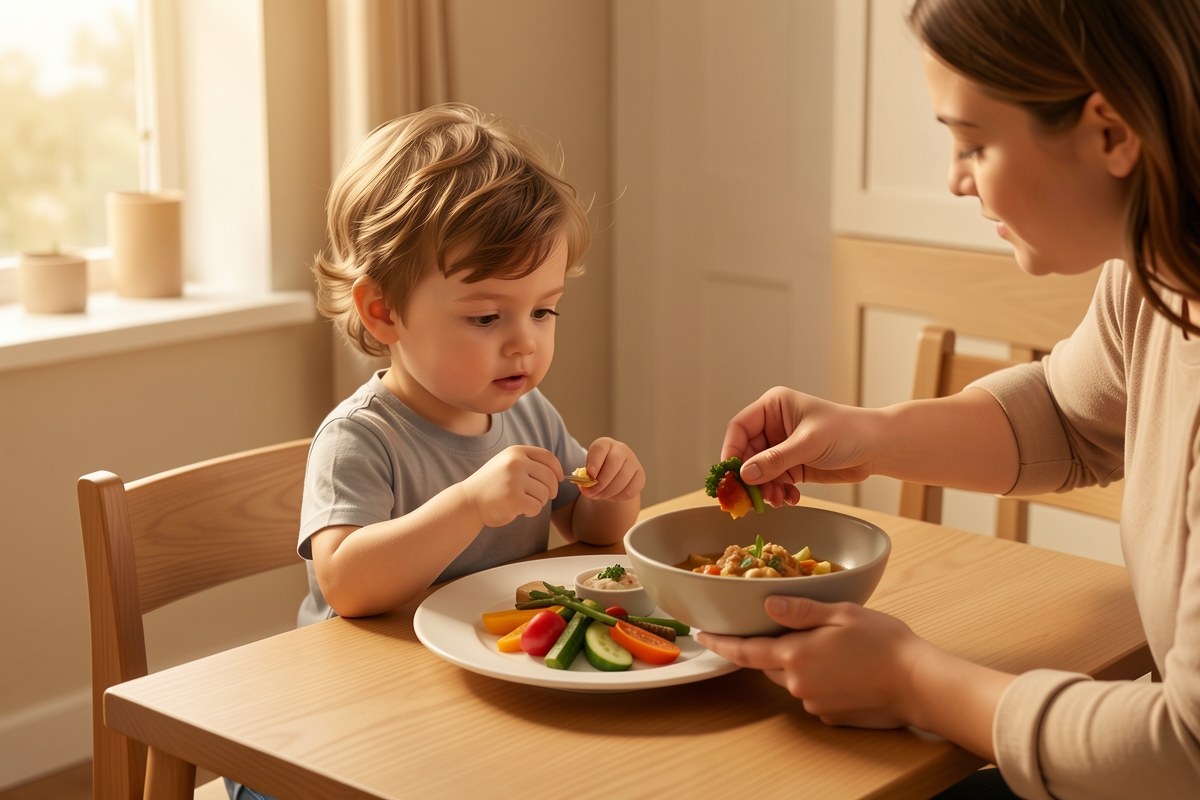
The Division of Responsibility: What Parents vs. Kids Decide
A widely recommended feeding framework is Ellyn Satter's Division of Responsibility. This evidence-based approach clarifies roles: parents decide what foods are offered, when meals are served, and where eating happens. Children decide whether to eat and how much.
In practice, this means you plan and prepare the meal, set regular meal and snack times, and eat together at the table. Your child chooses which foods on the plate to taste and how much to consume. Taking charge of the 'what, when, and where' reduces pressure and allows children to tune into their hunger and fullness cues.
- Parents are responsible for the structure: planning balanced menus, offering a variety of foods, and sitting down together.
- Children are responsible for their internal signals: whether to eat a particular food and how much to eat.
- Trusting this division can ease mealtime anxiety and help children become more comfortable with new foods over time.
Sources: Bluebird Child and Family Psychology, Just 4 Kids Health, Mount Sinai Parenting Center
How to Introduce New Foods Without Pressure
Children often need multiple exposures before they accept a new food. Research consistently shows that repeated exposure—often 8 to 15 presentations—can increase a child's willingness to try that food. The key is to offer new foods in a low-pressure, neutral way.
Start small. Offer a tiny portion of a new food alongside familiar favorites. This makes the unfamiliar less intimidating. Avoid pressuring your child to eat, and don't use food as a reward or bribe. Pressuring can backfire and increase resistance.
Your own eating matters too. When you model enjoyment of a variety of foods, your child sees that eating new things is a positive, normal experience. Family meals are a perfect setting for this kind of modeling.
- Aim to expose your child to a new food around 8–15 times; it can take patience.
- Serve a small portion of the new food on the plate, not a huge helping.
- Eat the same foods yourself and show enthusiasm for them.
- Ignore whether your child eats the new food; just keep offering it.
Sources: Bluebird Child and Family Psychology, Just 4 Kids Health, Mount Sinai Parenting Center, Chicago Psychotherapy, PLLC
Building Balanced Meals Around Preferred Foods
A practical strategy is to build a balanced plate starting with foods your picky eater already accepts. Then, add one new or less-liked food as a small side. This 'preferred food anchor' reduces the sensory overload of an entirely unfamiliar meal and encourages trying something new.
For example, if your child loves whole-wheat pasta with butter, you can serve it with grilled chicken strips (a familiar meat) and a tiny side of steamed broccoli. If they also enjoy carrots, add a small spoonful of peas to the carrots.
You don't need every element of a perfectly balanced diet at every single meal. Focus on providing a variety of nutrients across the day and week. This takes the pressure off any one dinner.
- Start with 1–2 foods your child reliably eats, then add one new food in a small portion.
- Consider mixing a new food with a favorite. For instance, blend a little cauliflower into mashed potatoes.
- If your child only seems to accept 'beige' foods like pasta, crackers, and chicken nuggets, you can still boost nutrition: choose whole-grain breads and pastas, and add a small side of fruit or steamed vegetables they already like.
Sources: Balanced Bites Science, Bluebird Child and Family Psychology, Just 4 Kids Health, Mount Sinai Parenting Center
Family-Style Meals and Self-Serving Tips
Serving meals family-style puts food in bowls on the table and invites children to serve themselves. This approach gives kids control over their portions and choices, which can increase their willingness to try new items.
Use bowls with small tongs or spoons so small hands can serve themselves easily. For younger children, you may need to help pass bowls, but avoid serving their plate for them unless necessary.
Let your child choose what to put on their plate, even if they skip a food entirely. The act of choosing can make them more invested in the meal. Keep the atmosphere pleasant and avoid commenting on what or how much they take.
If your child makes a mess while self-serving, that's part of learning. Over time, they'll become more confident and skilled at serving themselves.
Sources: Balanced Bites Science, Bluebird Child and Family Psychology, Mount Sinai Parenting Center
Meal Planning Examples for a Picky Eater
To make meal planning concrete, here are some dinner ideas that include a familiar base and a small 'explore' component. Offer these as a starting point, and adjust based on your child's accepted foods.
| Meal Idea | Preferred Food | New or Less-Liked Food |
|---|---|---|
| Whole-wheat spaghetti with marinara, served with mozzarella cheese and a side salad | Spaghetti | Side salad (let them choose: lettuce, tomato, or cucumber) |
| Chicken and cheese quesadillas with a small side of black beans | Chicken, cheese, tortilla | Black beans (can be mashed into a dip) |
| Rice bowl with ground beef, corn, avocado, and a drizzle of sour cream | Rice, beef, corn | Avocado (serve as a slice or spread) |
| Turkey roll-up (with cream cheese and veggies rolled in a tortilla) and a few baby carrots | Turkey, cream cheese, tortilla | Baby carrots (offer with ranch dip) |
| Breakfast for dinner: whole-wheat pancakes with strawberries and a sausage link | Pancakes, sausage | Strawberries (sliced or whole) |
Sources: Balanced Bites Science, Bluebird Child and Family Psychology
Involving Kids in Meal Planning and Preparation
When children help plan and prepare meals, they become more invested in eating the result. Even simple tasks—picking a vegetable at the store, tearing lettuce, or stirring a bowl—can boost their buy-in.
Set aside time to choose dinners for the week together. Let your child pick one or two meals they like, and frame the rest as family meals where everyone shares the same food.
Start with low-stakes tasks for younger children, and gradually increase responsibilities as they grow. The goal is to make the kitchen a welcoming place and build your child's confidence around food.
- Ask your child to pick a fruit or vegetable for the week.
- Have them wash produce, stir pancake batter, or set the table.
- Use a blank calendar or a simple list to mark down meal ideas together.
Sources: Balanced Bites Science, Bluebird Child and Family Psychology, Just 4 Kids Health, Mount Sinai Parenting Center
Frequently asked questions
How many times should I offer a new food before giving up?
Research suggests it may take 8 to 15 exposures for a child to accept a new food. Keep offering it in a neutral way, without pressure, and don't be discouraged if the first several attempts are refused. Patience and persistence are key.
Sources: Bluebird Child and Family Psychology, Just 4 Kids Health, Mount Sinai Parenting Center, Chicago Psychotherapy, PLLCShould I make a separate meal for a picky eater?
Generally, no. Serving one family meal and letting your child choose what and how much to eat—following the Division of Responsibility—is a better approach. Making separate meals can reinforce picky eating and make mealtimes more stressful. If your child refuses the meal, they can wait until the next snack or mealtime.
Sources: Bluebird Child and Family Psychology, Just 4 Kids Health, Mount Sinai Parenting CenterWhat if my child only eats beige foods?
It's common for picky eaters to prefer bland, familiar foods like crackers, bread, pasta, and chicken nuggets. You can still create balanced meals by choosing whole-grain versions of these foods, adding small amounts of vegetables or fruits they already accept, and gradually introducing new textures and flavors alongside their favorites.
Sources: Balanced Bites Science, Just 4 Kids HealthHow can I involve my picky eater in meal planning?
Involve your child in choosing meals and preparing them. Let them pick a vegetable at the store, help wash produce, or stir ingredients. When children have a hand in the process, they are more likely to try the food. Use a simple calendar to mark days and let your child choose one dinner idea.
Sources: Balanced Bites Science, Bluebird Child and Family Psychology, Just 4 Kids Health, Mount Sinai Parenting CenterWhat are some balanced meals that most picky eaters will accept?
Meals that pair a familiar staple with a small new element tend to work well. For example, whole-wheat pasta with marinara and a side salad, chicken and cheese quesadillas with black beans, or a rice bowl with ground beef and a small amount of avocado. Remember to serve small portions of the new food and keep the atmosphere relaxed.
Sources: Balanced Bites Science, Bluebird Child and Family PsychologySources
- How to Create a Balanced Diet for Picky Eaters: Evidence-Based Meal Planning and Healthy Cooking Tips for Aspiring Nutritionists and Dietitians – Balanced Bites Science — Balanced Bites Science
- 5 Proven Strategies to Help Your Picky Eater Enjoy Mealtimes — Bluebird Child and Family Psychology
- How To Manage Picky Eating Children And Healthy Nutrition 2026 — Just 4 Kids Health
- 5 Tips to Help Families Manage Picky Eating | Mount Sinai Parenting Center — Mount Sinai Parenting Center
- Getting to Yum: Evidence-Based Parenting Strategies for Picky Eaters | Chicago Psychotherapy, PLLC — Chicago Psychotherapy, PLLC