Batch Cooking and Freezer Meals for Busy Weeks
When your schedule gets hectic, having a stash of ready-made meals can be a lifesaver. Batch cooking involves preparing large quantities of food at once, then portioning and storing them for future meals. This approach saves time on busy weeknights and helps you resist the temptation to order takeout.
Start by choosing recipes that freeze well, such as soups, stews, casseroles, and pasta sauces. Cook a double batch on a weekend, let it cool, and store in individual or family-sized containers. Label everything with the date and contents so you know what you have on hand.
- Dedicate 1–2 hours on a Sunday to cook and freeze a few meals.
- Use freezer-safe containers or resealable plastic bags to store portions.
- Plan for meals that come together quickly after a busy day.
- Keep a list of what’s in your freezer to avoid overbuying or forgetting.
- Thaw frozen items in the refrigerator overnight for safe reheating.
Sources: WashU Medicine Physicians
Theme Nights to Simplify Decision-Making
Deciding what to cook every night can drain your energy. Theme nights assign a category or cuisine to each day of the week, cutting down on decision fatigue. For example, you might have Meatless Monday, Taco Tuesday, Pasta Wednesday, and so on. This structure gives you a framework to plan meals without starting from scratch each time.
Themes can also get your family excited about the weekly lineup. Let each person choose a theme, or rotate through favorite cuisines like Italian, Mexican, Asian, or breakfast-for-dinner. The key is to make it consistent so that shopping and prep become routine.
- Pick themes that match your family’s tastes and your cooking confidence.
- Keep a list of fun theme ideas, such as Pizza Night or “Breakfast for Dinner.”
- Use themes to try new foods and expand your family’s palate.
- Rotate themes to keep things interesting.
- Write the week’s themes on a whiteboard or calendar to stay organized.
Using Leftovers Strategically
Leftovers are a powerful tool in meal planning. Instead of thinking of them as “last night’s dinner,” view them as building blocks for new meals. Cook once and eat twice by repurposing roasted chicken into sandwiches, salads, or wraps. Use extra vegetables in omelets or stir-fries. Leftover grains can be turned into fried rice or grain bowls.
To make the most of leftovers, store them in clear containers so you can see what’s available. Plan “Use-It-Up” nights where you combine small portions of leftovers into a smorgasb-style meal, reducing food waste and saving money.
- Designate a few days each week to repurpose leftovers into new dishes.
- Store leftovers in clear, labeled containers to keep track.
- Use leftover proteins in lunches or as an easy dinner base.
- Freeze leftover soups and sauces for quick future meals.
- Encourage kids to suggest creative ways to use leftovers.
Sources: Nutrition4Kids
Make-Ahead Breakfasts and Lunches
Mornings are often rushed, but a little prep the night before can set you up for success. Prepare breakfast the evening before, such as overnight oats, egg muffins, or whole-grain pancakes that can be reheated. For lunches, pack school bags the night prior, making sure to include a mix of protein, whole grains, fruits, and vegetables.
Involving your kids in packing their own lunches can increase their excitement about eating what they pack. Let them choose from a few healthy options, such as sandwich ingredients or fruit selections. This not only lightens your load but also teaches them about balanced choices.
- Make a batch of breakfast burritos or muffins and freeze for busy days.
- Prepare lunch boxes the night before and store them in the fridge.
- Set up a “snack station” with pre-portioned items for easy packing.
- Involve kids in choosing and preparing their lunch items.
- Keep breakfast simple but nutritious, like whole-grain cereal with milk and fruit.
Sources: USDA SNAP-Ed, WashU Medicine Physicians, Imagine Early Education and Childcare
Involving Kids in Planning and Preparation
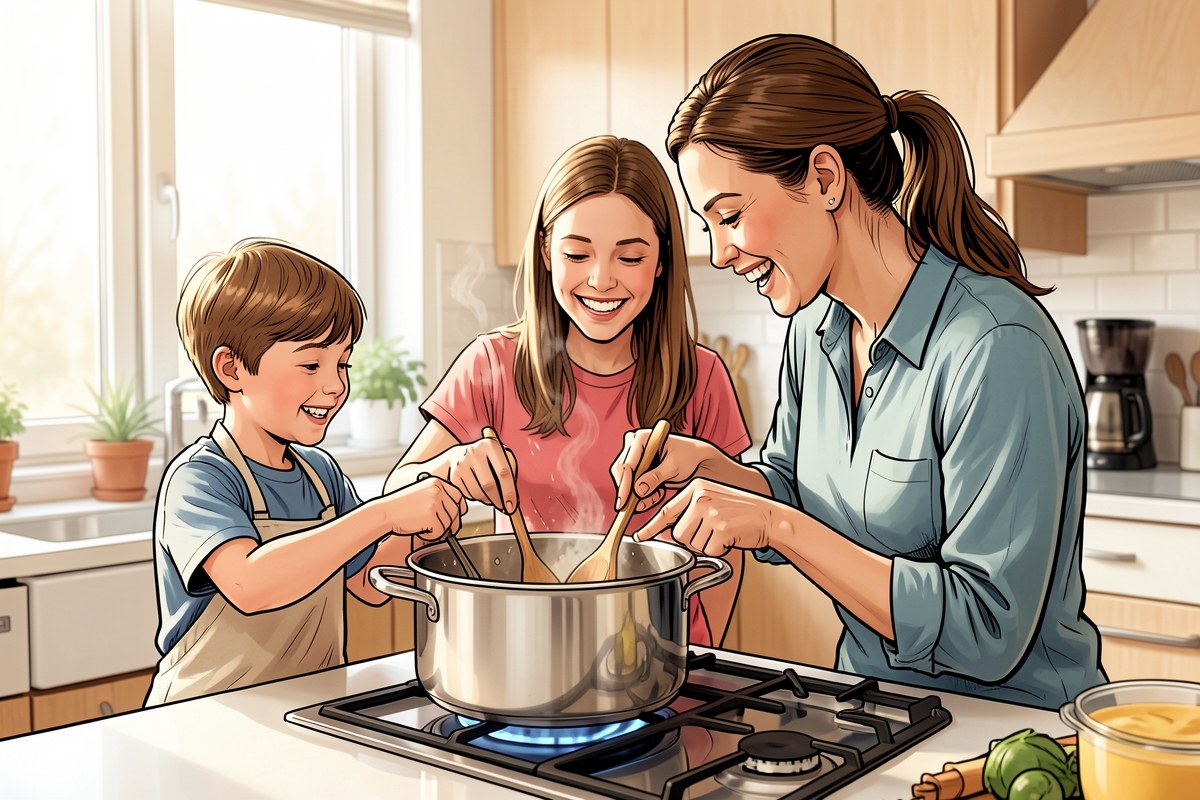
Getting your kids involved in meal planning and preparation can increase their willingness to try new foods and reduce picky eating. When children help choose what’s for dinner, they feel invested in the outcome. Start by letting them pick a vegetable or a recipe from a few you find acceptable. Show them how to prepare simple components, like washing produce, measuring ingredients, or assembling a dish.
Assign age-appropriate tasks so everyone helps and no one feels overwhelmed. Even young children as young as 3 years old can help with close supervision. Begin with tasks like tearing lettuce, stirring batter, or setting the table. As they grow, kids can move on to chopping soft vegetables, reading recipes aloud, and even cooking simple dishes with guidance.
Give positive feedback and let your child have a special “cook’s helper” plate or apron to build enthusiasm. Teach food safety from the start, including washing hands, tying back long hair, and never licking fingers while cooking. These skills not only save you time but also teach your children about balanced diets and the nutritional value of foods.
- Let kids choose a new fruit or vegetable to try each week.
- Teach simple kitchen safety rules, like washing hands and using tools properly.
- Involve kids in grocery shopping by having them find items on your list.
- Use positive reinforcement, such as a special apron or chef hat.
- Praise their efforts, not just the outcome, to build confidence.
Sources: Imagine Early Education and Childcare, USDA SNAP-Ed, WashU Medicine Physicians, Michigan State University Extension, Children's Hospital of Philadelphia, Nutrition4Kids
Planning for Inevitable Schedule Changes
Even the best meal plan can be disrupted by late meetings, unexpected appointments, or a child’s illness. To stay resilient, build flexibility into your planning. Keep a few emergency dinner ideas in your pantry, such as pasta with canned tomatoes, or a frozen casserole that can be defrosted quickly. Learn that it’s okay to swap days and adjust, rather than stressing over perfection.
Another strategy is to plan for duplicates and use your freezer as a backup. If you cook a batch of chili or soup, freeze half for a night when you’re pressed for time. Also, consider having a list of “quick meals” that take less than 30 minutes, so you can pivot without a scramble.
- Keep a whiteboard or calendar to shift meals as needed.
- Have a go-to list of 15-minute meals for hectic evenings.
- Freeze leftovers after making them, not just at the end of the week.
- Allow themed nights to be flexible—if Tuesday is busy, swap to Wednesday.
- Designate one night a week as a “clean-out-the-fridge” meal.
Frequently asked questions
What is the best way to use leftovers in meal planning?
Turn leftovers into new meals by repurposing them: use roasted chicken in sandwiches or salads, extra vegetables in omelets or stir-fries, and cooked grains in fried rice or grain bowls. Plan an occasional “Use-It-Up” night where you combine small portions into a smorgasb-style dinner. Store leftovers in clear, labeled containers to keep track of what you have.
Sources: Nutrition4KidsHow can I get my kids excited about meal planning?
Involve them in the process. Let each child pick a meal once a week, take them to the grocery store and have them find ingredients, and offer them a special “cook’s helper” apron or plate. Give positive feedback for their help, and let them do age-appropriate tasks like washing produce, measuring, or assembling simple dishes.
Sources: USDA SNAP-Ed, Michigan State University Extension, Children's Hospital of PhiladelphiaWhat are quick and healthy breakfast ideas for school mornings?
Prepare ahead to make mornings easier. Options include overnight oats, egg muffins, whole-grain pancakes you can reheat, or yogurt parfaits with fruit and granola. You can also make breakfast burritos and freeze them. The night before, pack lunches and set out breakfast essentials so everything is ready to grab.
Sources: USDA SNAP-Ed, WashU Medicine PhysiciansHow do I meal plan for a week when I'm dining out?
When you know you’ll eat out on certain nights, plan your meals for the remaining days and incorporate those dining-out occasions into your schedule. On nights before you eat out, choose lighter meals at home. If you’re going out to a restaurant, look at the menu ahead of time and decide what to choose, balancing it with your family’s overall nutrition.
What are some make-ahead dinner ideas for busy weeknights?
Cook and freeze batches of soups, stews, casseroles, pasta sauces, or meatballs, then thaw or reheat quickly. Prepare marinades or seasonings in advance, and use pantry staples like canned beans or whole grains. On the weekend, assemble freezer meals in disposable trays, label them, and have them ready to bake straight from the freezer.
Sources: WashU Medicine PhysiciansSources
- Healthy Meals for Kids They'll Actually Eat — Imagine Early Education and Childcare
- MAKE EASY AND HEALTHY FAMILY MEALS! — USDA SNAP-Ed
- Healthy eating and meal planning for busy families — WashU Medicine Physicians
- Involve the kids in meal planning and preparation — Michigan State University Extension
- Getting Kids Involved with Healthy Meal Preparation — Children's Hospital of Philadelphia
- Involving your kids in meal planning and preparation teaches them more than you might imagine! — Nutrition4Kids