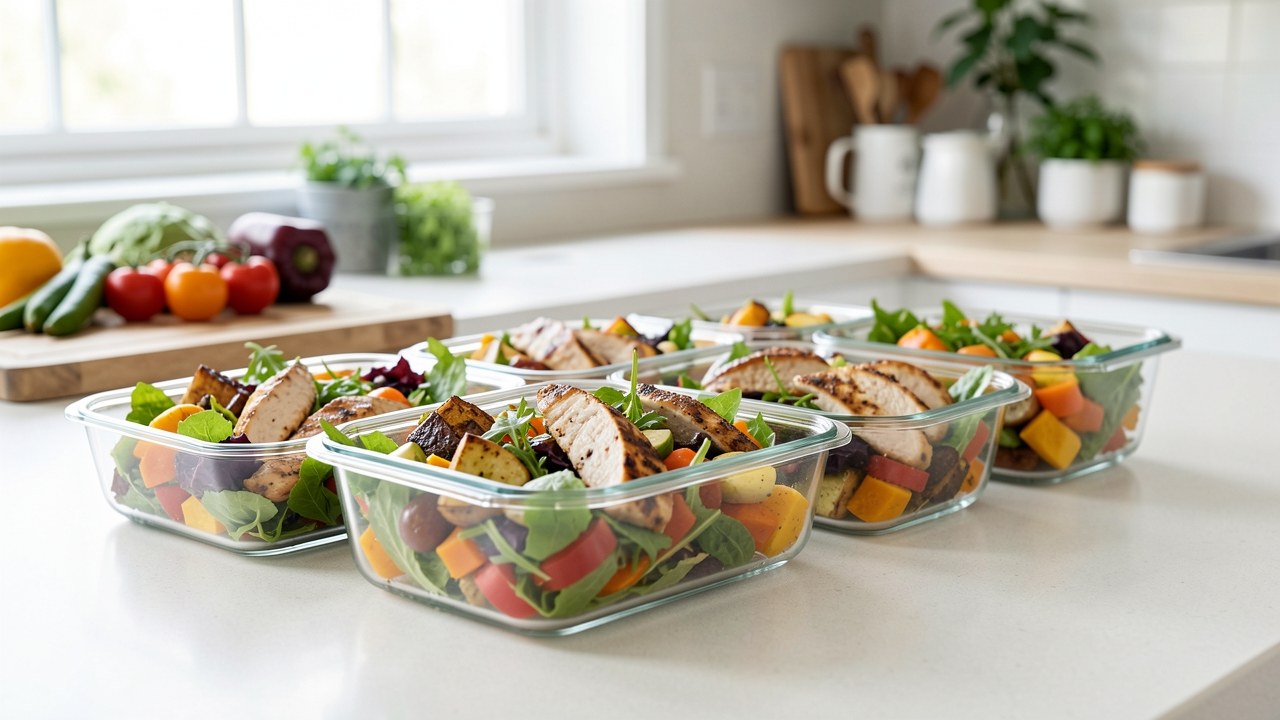
What is meal prep and why it helps families
Meal prep means setting aside a block of time to prepare ingredients or full meals ahead of schedule. For families, this practice can turn hectic weeknights into calm, doable evenings. Instead of deciding what to cook at the last minute, you already have components ready to assemble or reheat.
The benefits go beyond saving time. When you plan and prep ahead, you're more likely to make balanced choices and avoid the stress of takeout or convenience foods. Having healthy, ready-to-eat options in the fridge means your family can eat well even on your busiest days. This guide walks you through the basics of family meal prep, from planning your recipes to storing portions safely.
How to plan a meal prep session (recipes, quantities)
Start by deciding which meals you want to prep. Some families prep only dinners, while others also set up breakfasts and lunches. Think about your family's preferences and schedule. Choose recipes that share similar ingredients to reduce waste, and consider cooking methods that save time, like using a slow cooker or a multi-cooker. The goal is to make a realistic plan that fits your time and energy.
Once you've chosen your meals, make a list of what you need. Decide how many days you are prepping for—usually three to five—and multiply your recipes accordingly. Consider your family's portion sizes and appetites. If you're unsure how much to cook, start with one or two meals and adjust next time.
- Pick balanced meals that include vegetables, protein, and whole grains.
- Choose two or three recipes to avoid feeling overwhelmed.
- Make a detailed grocery list organized by store section.
- Set a specific prep day and time, such as Sunday afternoon.
- Plan for leftovers to become quick lunches or another dinner.
Essential containers and kitchen tools
Having the right equipment makes meal prep more efficient and helps your food stay fresh. For storage, glass containers are a popular choice because they are microwave-safe, reusable, and don't retain stains or odors. They are heavier and breakable, but many families prefer them for safety and durability. BPA-free plastic containers are lightweight and stackable, though they may stain or wear over time. Mason jars are also effective for storing homemade meals or ingredients.
You don't need a lot of specialized gadgets to start. A solid chef's knife and a good cutting board are essential. As you get into a routine, you might appreciate tools that speed up prep: a food processor can chop, slice, and even make dough or cauliflower rice; a mandoline slicer creates uniform vegetable slices quickly; and a spiralizer turns vegetables like zucchini into noodles. Cookware like a slow cooker or a multi-cooker (such as an Instant Pot) can batch-cook soups and stews with little hands-on time. A blender is great for smoothies and soups, while an immersion blender lets you blend directly in the pot. A rice cooker prepares grains consistently, and a steamer basket cooks vegetables simply.
| Container type | Advantages | Disadvantages |
|---|---|---|
| Glass containers | Microwave-safe, reusable, doesn't retain stains or odors | Heavier, breakable |
| BPA-free plastic containers | Lightweight, stackable | Can stain or wear over time |
| Mason jars | Effectively store homemade meals or ingredients | No specific disadvantages cited |
Sources: Flavor & Wellness, FISSMAN, Caraway, Becoming You With Julie, Nancy on the Homefront, Jesse Lane Wellness, Guerrilla Grafters
Step-by-step meal prep process for a week
Here is a simple process to help you prep balanced meals for your family. The key is to work efficiently and avoid overcomplicating things.
- Decide how many meals to prep and what those meals will be. Choose recipes that are family-friendly and easy to reheat.
- Shop for all your ingredients. Having a detailed list helps you avoid extra trips to the store.
- Wash and chop vegetables. You might store them raw in containers or roast them in the oven to use later.
- Cook your grains, such as rice, quinoa, or pasta. Let them cool completely before storing.
- Prepare your proteins. This could be baking chicken breasts, browning ground turkey, or simmering beans and lentils.
- Assemble meals in your containers if you are making full meals, or store components separately for flexibility.
- Label each container with the meal or ingredient and the date. This helps you track freshness and plan for the week.
- Store in the refrigerator or freezer according to what the meal requires.
Food safety: cooling, storing, and reheating
Keeping your prepped meals safe to eat is essential. To prevent bacterial growth, it is important to cool cooked food promptly and refrigerate it within a reasonable time. Always reheat food to serving temperature, making sure it's steaming hot throughout. When in doubt, throw it out.
- Refrigerate cooked meals promptly after they stop steaming to minimize time at room temperature.
- Reheat leftovers until they are piping hot throughout.
- Freeze meals for longer storage, but note that texture may change after thawing.
- When storing washed greens, dry them thoroughly to extend their freshness.
Sources: Flavor & Wellness, FISSMAN, Caraway, Jesse Lane Wellness, Guerrilla Grafters
Meal prep ideas for breakfast, lunch, and dinner
Here are some balanced meal prep ideas to get you started. These are flexible suggestions rather than exact recipes. You can adjust portions and ingredients to suit your family's tastes.
For breakfast, you can make overnight oats in jars, frittata muffins with vegetables, or a batch of whole-grain pancakes to freeze. For lunch, build your own grain bowls with cooked grains, roasted vegetables, and a protein like chicken or chickpeas. Dinners might include a slow-cooker chili that feeds the family for two nights, or baked chicken breasts with sweet potatoes and steamed broccoli.
The key is to include a source of protein, a vegetable or fruit, and a whole grain in each meal. Use your prep time to cook a few base components that you can mix and match throughout the week.
- Breakfast: overnight oats, egg muffins, or freezer-friendly smoothie packs.
- Lunch: quinoa salad jars, turkey wraps, or soup in a thermos.
- Dinner: slow-cooker taco meat, baked salmon with rice, or vegetable stir-fry with tofu.
- Prep versatile ingredients like roasted vegetables, cooked grains, and grilled chicken to assemble meals in minutes.
Frequently asked questions
How do I keep prepped vegetables fresh for several days?
The key is to keep vegetables dry and store them in airtight containers in the refrigerator. A salad spinner helps remove excess water from washed greens, which prevents them from wilting quickly.
Sources: Flavor & WellnessSources
- 2 Essential Kitchen Gadgets for Healthy Meal Prep | Flavor & Wellness — Flavor & Wellness
- 2026 Meal Prep Essentials: The Containers, Tools & Cookware You Need — FISSMAN — FISSMAN
- 16 Best Kitchen Tools for Meal Prep: Containers, Gadgets, & Cookware | Caraway — Caraway
- Best Kitchen Tools for Meal Prep — Becoming You With Julie
- Effortless Meal Prep: Essential Kitchen Tools Every Mom Needs — Nancy on the Homefront
- Best Meal Prep Tools to Save Time The Kitchen — Jesse Lane Wellness
- Best Kitchen Tools for Meal Prep Efficiency — Guerrilla Grafters